




Ready to kickstart your next big project?
Let's innovate together.
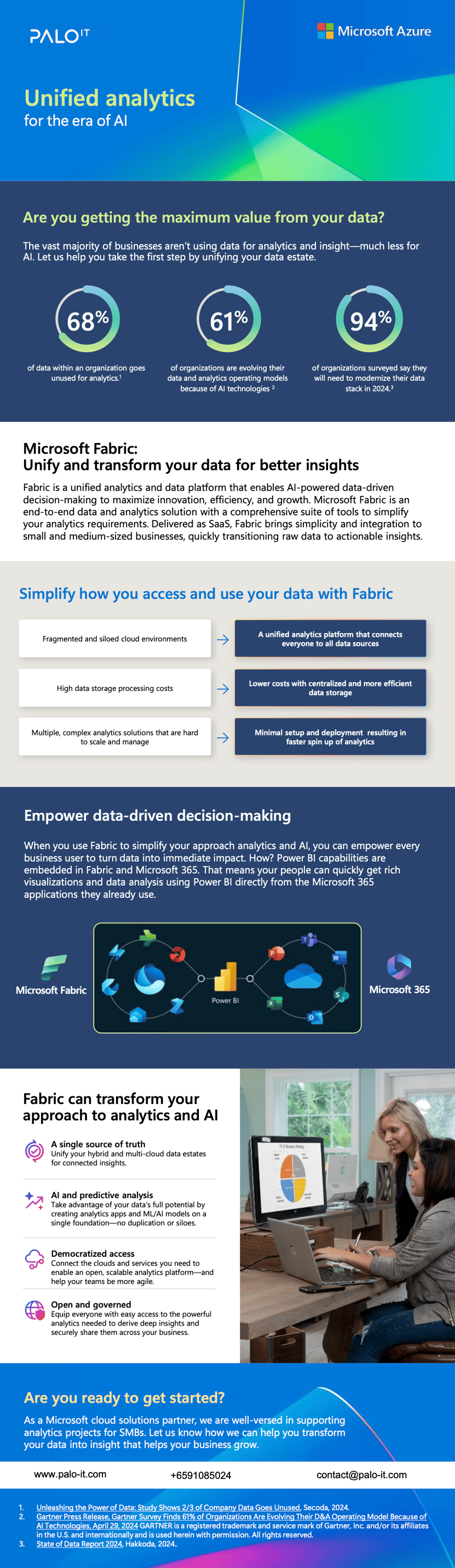
Across industries, teams now more than ever are in a position where they need to make quicker, more intelligent, data-driven decisions. In the AI era, data is the engine behind absolutely everything, whether it be your business model, your user experience, or your internal ways of working. According to a Gartner survey, 61% of organizations are evolving their data & analytics operating model because of AI. For small- to medium-sized businesses, this need is even more pressing.
A powerful AI, analytics and data strategy will both tie together and simplify for improved results, but, clearly, that's easier said than done. We're well aware of the challenges that any business faces when they come face to face with data management.
Let's review some simple advice that will move the needle, and get you started on your journey.
1. Assess the Landscape
Before implementing any brand new solutions, take a real look at your data inventory. Where does your data currently reside? How is it collected? How is being (or not being) used? Having a clear picture of your data landscape will help you pinpoint initial gaps and areas for improvement as you move towards data modernization.
2. Choose the Right Tools
It's key to choose tools that fit what you're trying to accomplish at your organization. Search for platforms that support open data formats and can very easily be integrated with your existing systems. Flexibility is the name of the game when it comes to tools, and this will help you centralize your data without unneeded complexities. As an Azure Microsoft partner, we can say firsthand Microsoft Fabric is an excellent solution for this purpose, which we'll dig into below, but regardless, tools are not a one-size-fits-all deal.
3. Establish a Single Source of Truth
A unified data platform tears down data silos and leaves them in the past, allowing all departments, teams, and individuals to access the same information. This single source of truth is crucial for accurate reporting and analytics. What this means when it comes to your data platform, is that it needs to have the ability to automatically index and catalog data for simple discovery, governance and compliance.
4. Consider Self-Service Analytics
Providing your team with self-service analytics tools can make all the difference. Of course we want our teams to be proactive in deriving insights from data, but they need the right data visualization tools to make this happen. It's worth investing in tools that allow users to explore data and create reports without needing extensive technical knowledge. Data-driven culture can be simple to adopt if we make self-reliance our priority.
Let's take Microsoft Fabric as an example, which offers a solution that enables AI-powered data-driven decision-making, checking the boxes on innovation, efficiency, and growth.
5. Quality over Quantity
The effectiveness of your analytics is really only as good as the data it’s based on. Implementing broad data governance practices to will ensure both high-quality and high-integrity data. In addition to that, regularly cleaning and updating data will help you maintain accuracy and relevance.
6. Continuous Training and Support
We can talk all day about tools, but the reality is that regardless of AI's proliferation, investing in your team's skills is more vital that ever. Consider providing ongoing training on new tools and technologies that enter your industry's sphere, and encourage a culture of continuous learning to make sure your team stays ahead of the curve when it comes to best practices in data management and analytics. Read more about client success stories like training Pernod Ricard on AI, to understand how much of an impact this can have on an organization.
Conclusion
In order to tackle data and analytics in the era of AI, you need a qualified partner who is experienced across Microsoft's Intelligent Data Platform suite of solutions. If you're searching for a team with the right expertise—or you're looking to certify your own team—PALO IT has you covered across Azure data fundamentals, Azure AI fundamentals, Azure basic certification, Azure security certification and more.
In a nutshell, we have the track record and experience to use AI in leveraging your data and analytics to their utmost potential. Get in touch with our team and let's start the journey, together.